





7 Things to Keep in Mind When Choosing an Ergonomics Risk Management Software
Seven factors to evaluate before choosing ergonomics software: real solutions, employee adoption, ergonomist-led design, reliable AI, and scalable pricing.
 Health
  Setup
Setup The market for ergonomics software has grown significantly over the past five years, which is, in theory, good news. More options mean more competition, better products, and lower prices. However, it also means a proliferation of tools that all claim to do broadly the same thing, making the buying process difficult if you don’t know what to look for.
To help make the right choice, we interviewed safety officers, HR directors, and occupational health managers across multiple sectors. Here are seven critical factors they wish they had evaluated before selecting a vendor.
1. Does it give you just risk scores, or solutions?
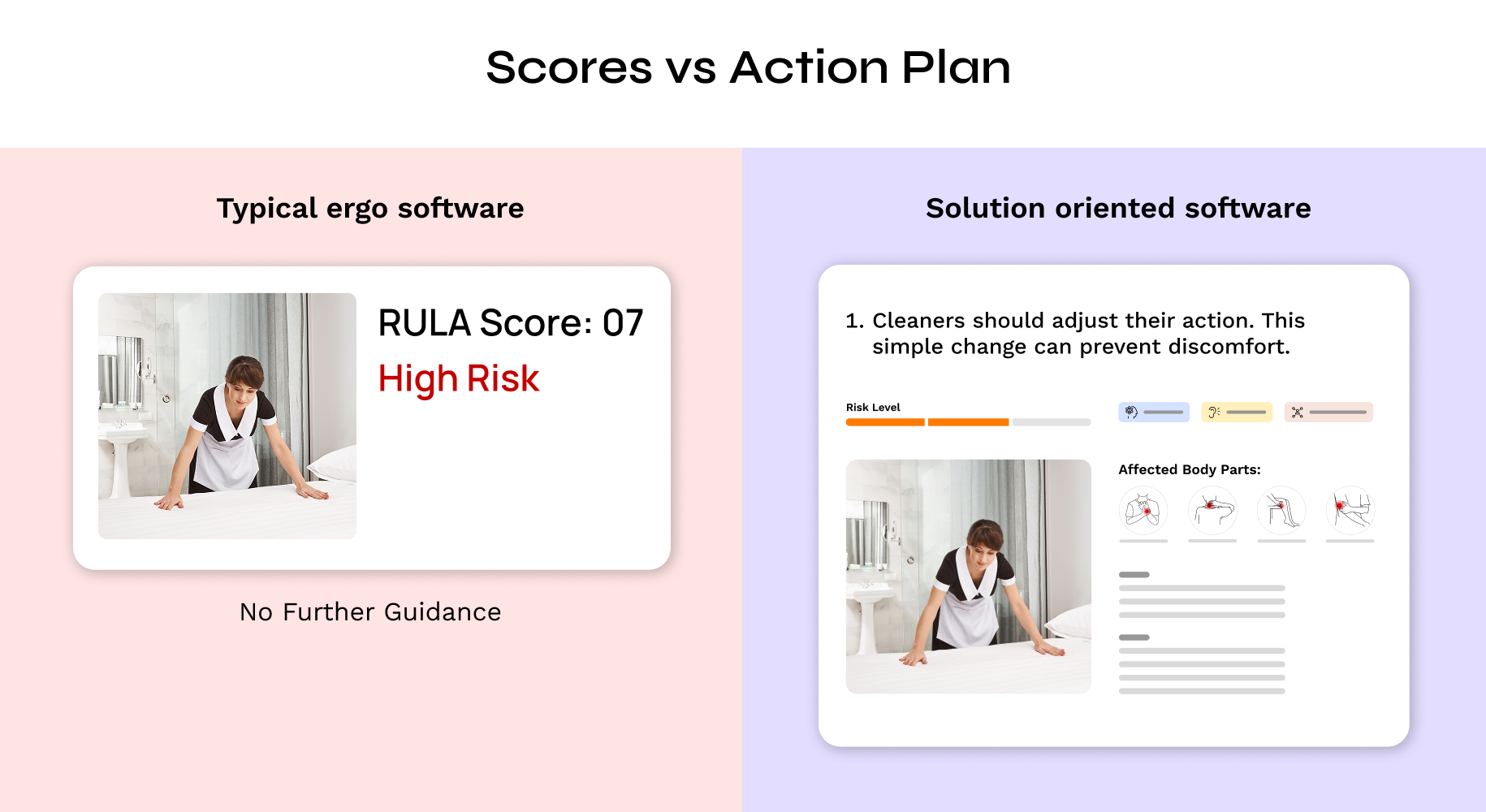
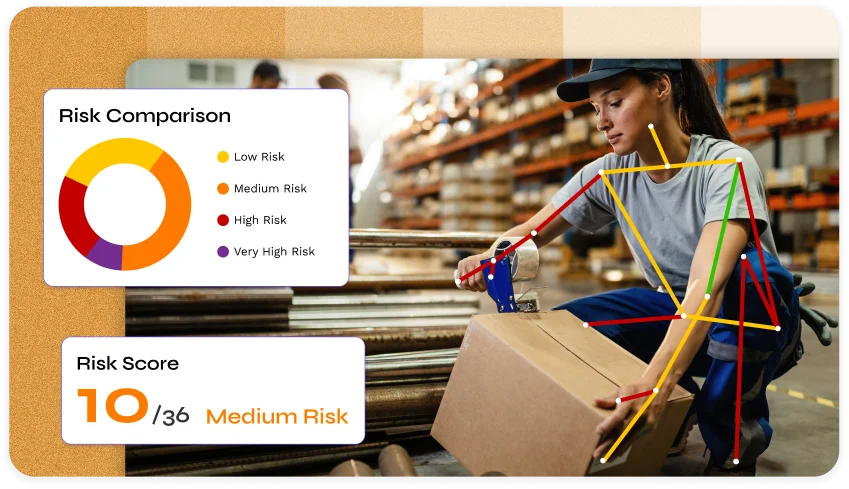
The majority of ergonomics software on the market functions purely as a diagnostic tool. These systems run user data through standard frameworks like REBA or RULA and produce a risk score: colour-coded, percentage-based, body-mapped. And then it stops.
A risk score tells you that something is wrong. But it doesn’t tell you why. What you really need is to map the postural problems to root causes, know the specific changes to make and the relevant products to procure, assign responsibility, set timelines, and track implementation so the risk is actually addressed. Most software leaves this hard work of risk management to you.
If you wonder why most software providers don’t offer solutions, the real reason is that they can’t. They either use electronic surveys or computer-vision tools that analyze body angle data without understanding the underlying job design, workstation setup, environmental factors, or tools that may be influencing the suboptimal posture. Without this holistic context, there is no way to offer any solutions.
Consider:
- Does the report go beyond scores and provide specific recommendations?
- Does the software give you a prioritised action plan?
- Does the software connect to products you can actually procure?
- Does the software provide a mechanism for tracking implementation of recommendations?
To go beyond paperwork and really solve issues like an expert would, choose a risk management software like BalanceFlo. It not only provides framework-based assessment and scores, but goes further and gives specific, practical recommendations that can be tracked via prioritised action plans, with support from expert ergonomists.
2. Is it usable and engaging for employees?
An ergonomics platform delivers zero value if your workforce refuses to engage with it because the interface is confusing, time-consuming, or built only for specialists. Software that forces employees through lengthy surveys, or produces reports full of technical jargon and impractical advice, is usually avoided. Similarly, ergonomics training is barely effective when it is time-consuming and non-personalized.
Consider:
- Can the self-assessment be completed by an employee easily and quickly?
- Does the report make sense to someone who doesn’t know ergonomics jargon?
- Is the training short, practical, and delivered in a way that promotes behaviour change?
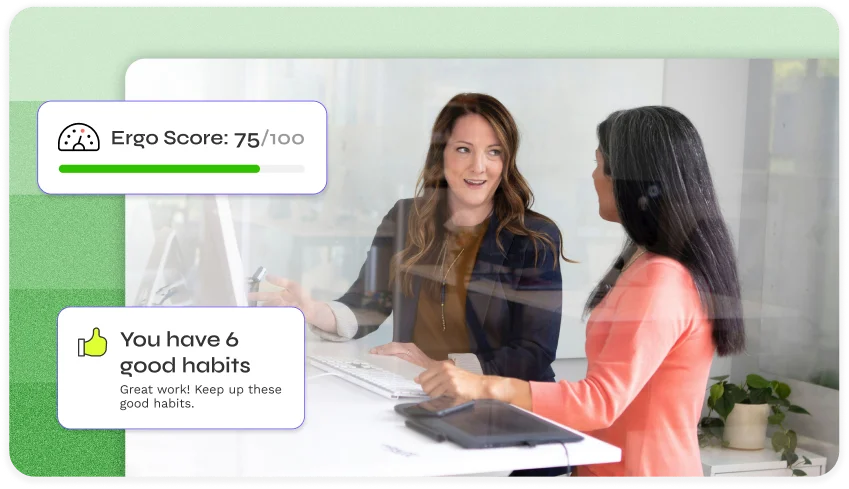
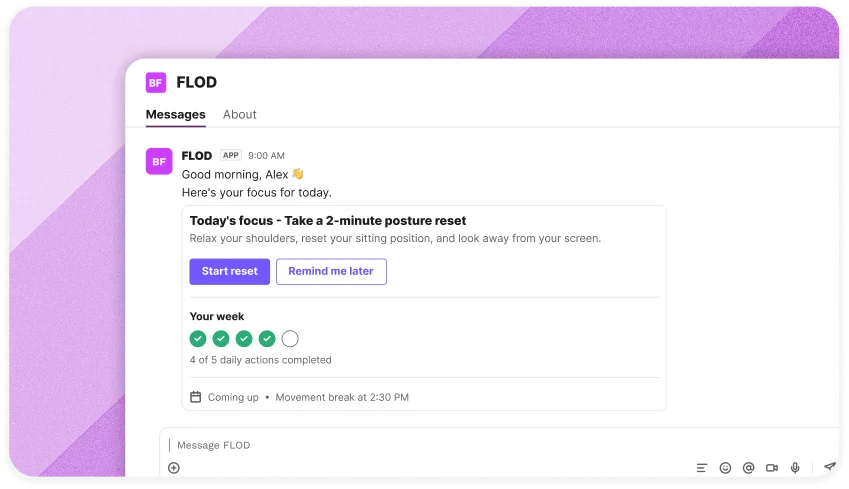
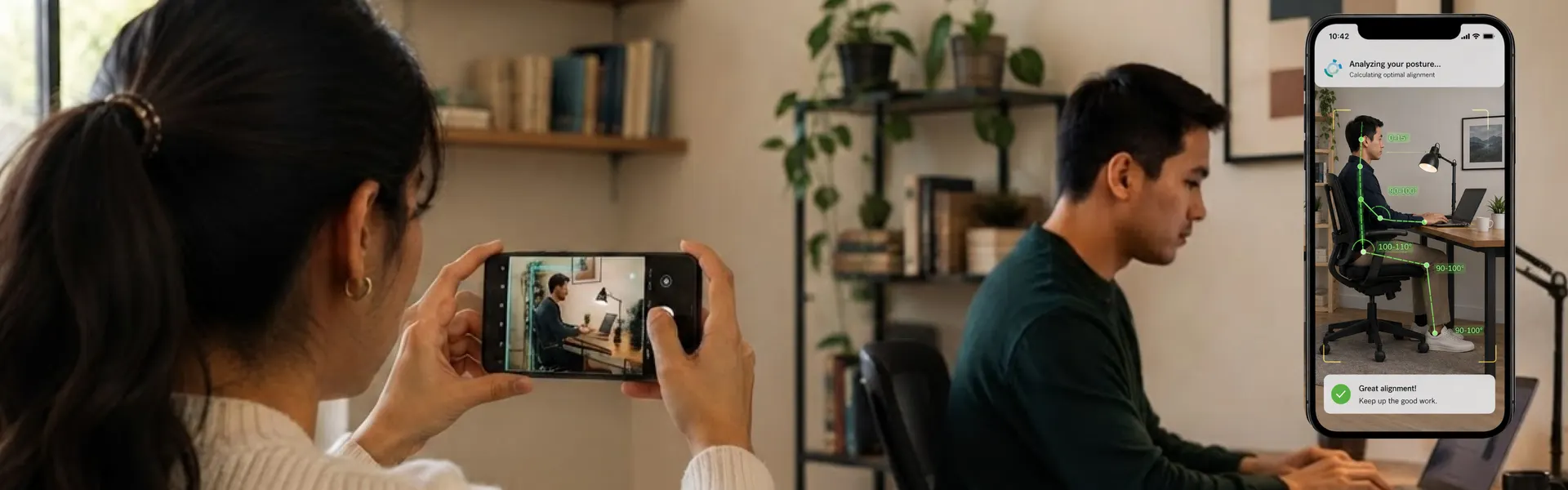
Risk management software like BalanceFlo is consciously designed for employee engagement and buy-in. Assessments can be completed within 60 seconds using a simple photo submission, producing personalized, jargon-free, visual reports. Training is also modelled on each person’s needs and converted to bite-sized microhabits delivered at regular intervals to increase adoption of good practices.
3. Was it developed under the guidance of full-time, certified ergonomists?
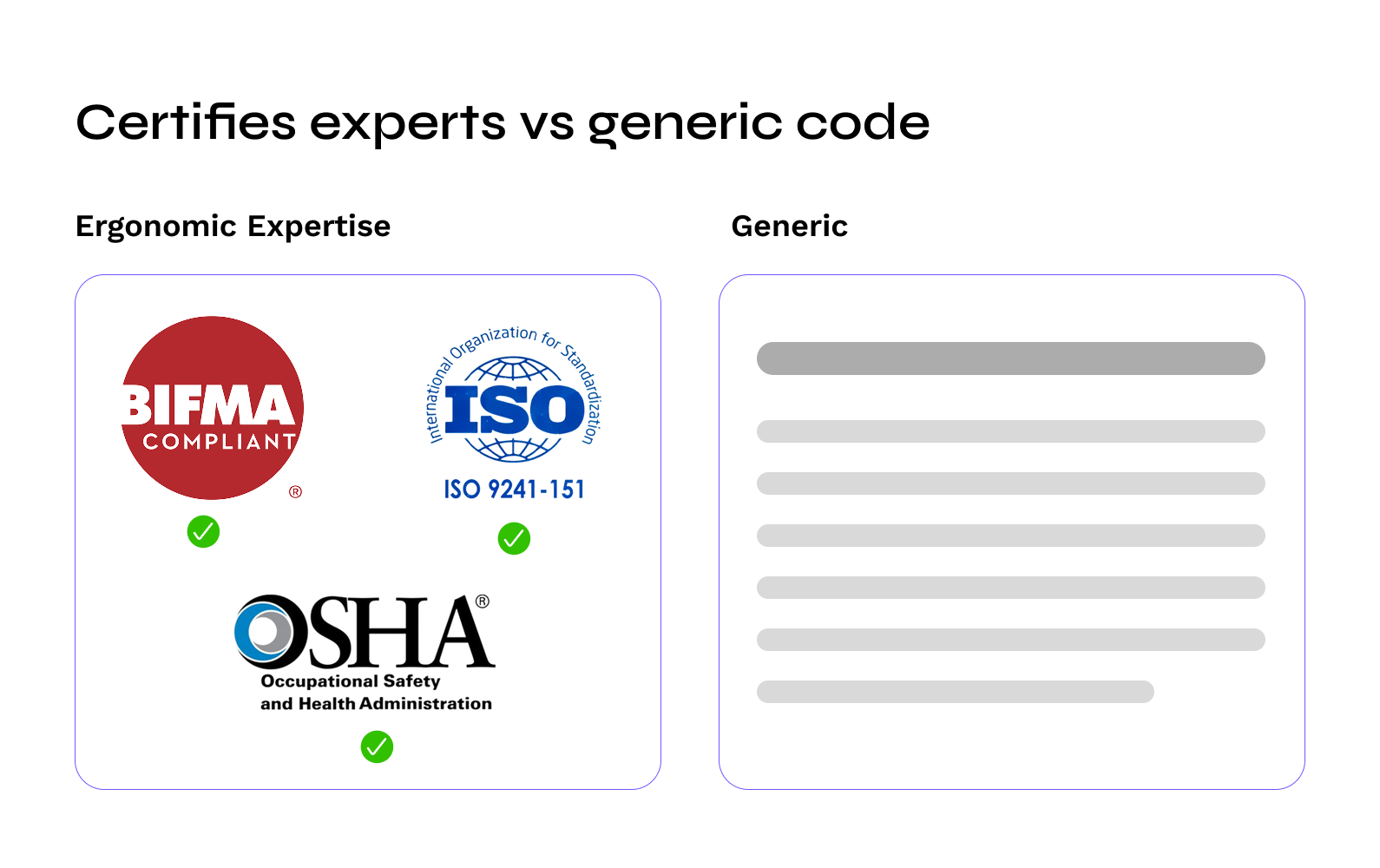
The ergonomics software market includes many products built by healthcare companies or tech startups with an ad-hoc ergonomist serving as an advisory team member. An ergonomics platform fully conceptualized by ergonomists will ask different questions and flag different risks. And that difference shows up in the quality of your outcomes. For example, a generic ergonomics software may recommend sitting at a 90-degree angle as the perfect posture. However, an ergonomist-built platform would know that research points towards angles greater than 90 degrees, or open angles, to reduce spinal pressure and promote blood circulation.
Consider:
- Was the software development process led by full-time, certified ergonomists?
- Has the platform’s assessment logic been validated against established standards?
- Are the recommendations based on real consulting experience across multiple industries and job types?
BalanceFlo is created and managed by seasoned ergonomists with several decades of field experience conducting thousands of workstation assessments. The framework combines established standards like ISO 9241 with research-based best practices. AI is used under strict human supervision, and the machine learning (ML) models are selected, trained, and tested by experts, so you get professional, high-quality, reliable insights.
4. Does the hazard analysis include only physical factors, or cognitive ones too?
Most software stops at physical observations such as awkward postures and potential musculoskeletal risk. This is partly due to the limitations of frameworks like REBA, RULA, and NIOSH, which stop at physical hazards, and partly due to the limitations of computer-vision tools that only analyze body angles. However, like a seasoned ergonomist, good software should know that work-related hazards often include confounding variables such as cognitive, environmental, and organizational factors.
For example, an operator not following safe lifting technique, or working at an unusually fast pace leading to fatigue or burnout, is often not a behavioural problem. Rather, it may be the result of unrealistic quotas or poor job design. Without including these aspects in the analysis, root causes may be inaccurate and recommendations may not truly solve the problem identified.
Consider:
- What variables does the software analyse: just physical, or more?
- Do the recommendations capture deeper root causes, or only superficial ones that are visible?
- Does the software analyze cognitive, environmental, psychosocial, and systemic issues?
BalanceFlo stands out in the market because it also holistically detects hazards not listed in the traditional frameworks. This ensures that every job assessment is strategic, recommendations are tied to the real root causes, and systemic changes are possible. It is arguably the only ergonomics risk management software globally with advanced algorithms for capturing non-physical hazards and risks. If you are looking for a well-rounded, strategic, deep analysis that goes beyond traditional risk frameworks, make it your preferred choice.
5. Is the AI capability just a marketing gimmick?
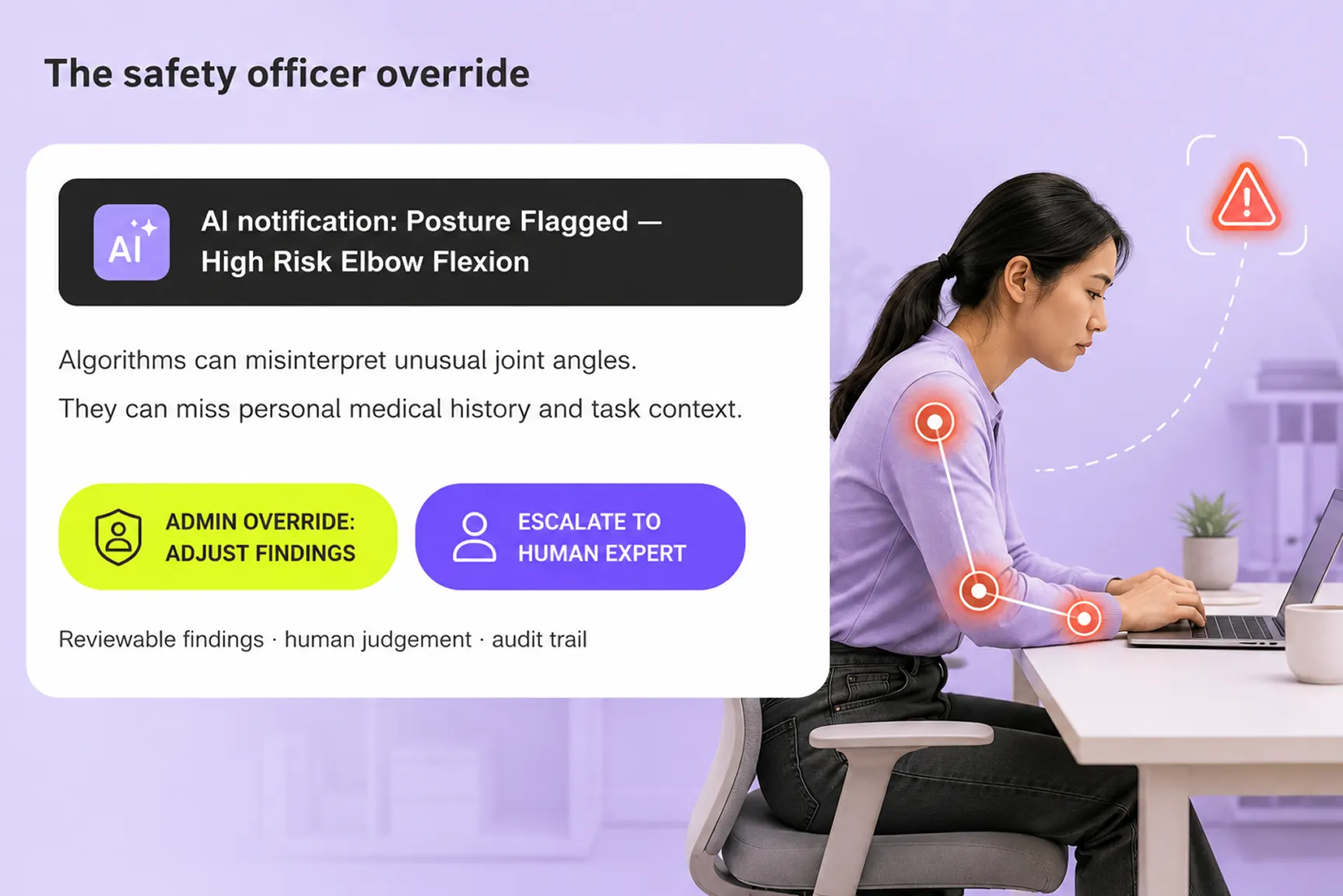
AI is becoming an integral part of many ergonomics software platforms. But what you need is something that actually works, reliably.
Many products today simply put a wrapper around LLMs like ChatGPT or Claude and call it the core. This does not work in complex organizational scenarios, because pure LLMs may lack the depth of use-case handling expected: collecting full job and posture related data, benchmarking it against standards, and providing holistic solutions. Also, most software in the market today is designed for industrial environments but becomes too complex to handle in office settings. Lastly, many algorithms are designed for ideal video input with a solo operator, perfect angles, and optimal lighting, but quickly get confused and produce muddled analysis when videos cannot be shot perfectly due to constraints, or when there’s a teamwork scenario.
Consider:
- Does the AI actually work as advertised?
- Are the AI input requirements, like video capture, too stringent or impractical?
- Is there a reliability study for the AI output?
AI-enabled software like BalanceFlo does not just depend on LLMs. It has its own proprietary knowledge engine designed by certified ergonomists, and machine learning models that produce deep analysis of any job type and environment. It works with a simple mobile-phone-based photo or video upload, with advanced capability for compensating for input limitations.
6. Does the pricing model allow you to scale across job types and locations?
Ergonomics software with an adequate number of assessments often comes with a high price tag, affordable only to large enterprises. Even then, most of the licensing benefits are never utilized due to low employee participation or complexity. On the other hand, low-cost software with a limited number of assessments often makes risk coverage lopsided, restricted only to high-risk jobs or select geographical locations like company headquarters. Further, pricing-related barriers become a bottleneck as employees work in hybrid environments, change jobs, or have diverse postural needs as their life stages change.
Consider:
- Is the base licensing cost too high?
- Is the base licensing cost too low, with a hidden, high cost for additional assessments?
- Do pricing plans include features or modules you do not need?
- Is the licensing model customizable to suit your company size and requirements?
A well-priced ergonomics software like BalanceFlo provides customizable price plans for small and big companies. When organizations can pay only for what they need, they can cast the ergonomics safety net wider, support the dynamic needs of the workforce, and maximize the return on investment.
7. Does it integrate with your organizational ecosystem?
An ergonomics software that sits as a standalone program has a high risk of becoming obsolete over time. If employee and job data, safety regulations, and ergonomics risk assessment outcomes do not easily flow across legacy systems like HR, EHS, intranets, or management dashboards, all stakeholders have to invest extra effort and money into making the ergonomics program work. This is usually not sustainable.
Consider:
- Can the ergonomics software seamlessly merge with existing legacy systems?
- Can employees access it easily through single sign-on?
- Does the software introduce any new IT risk when deployed?
Platforms like BalanceFlo are designed to integrate with existing HR and health & safety workflows so adoption is frictionless. Single sign-on allows easy access for employees as well as managers, who can see injury trends and the ROI of ergonomics programs. ISO 27001 and SOC 2 certification, along with GDPR compliance, ensure that the privacy and data security of the overall system is always upheld.
A final note on the buying process
The ergonomics software category is full of tools that look similar in a demo and feel very different in practice. Therefore, making the right choice requires looking past basic risk scores and prioritizing user engagement, holistic risk assessment, and reliability of AI, as well as the cost and scalability of the software.
In addition to using the above seven points and asking for a free trial, an objective test during procurement is to ask the vendor to share the most common reasons their clients cancel their subscriptions. Their answer will often reveal the software’s true operational limitations.
In summary, choosing the right ergonomics software requires looking past basic risk scores and prioritising employee engagement, holistic risk assessment, reliable AI, and transparent, scalable pricing.


 Fitness
 Equipment
  Posture